

 English
 中文简体
中文简体 Español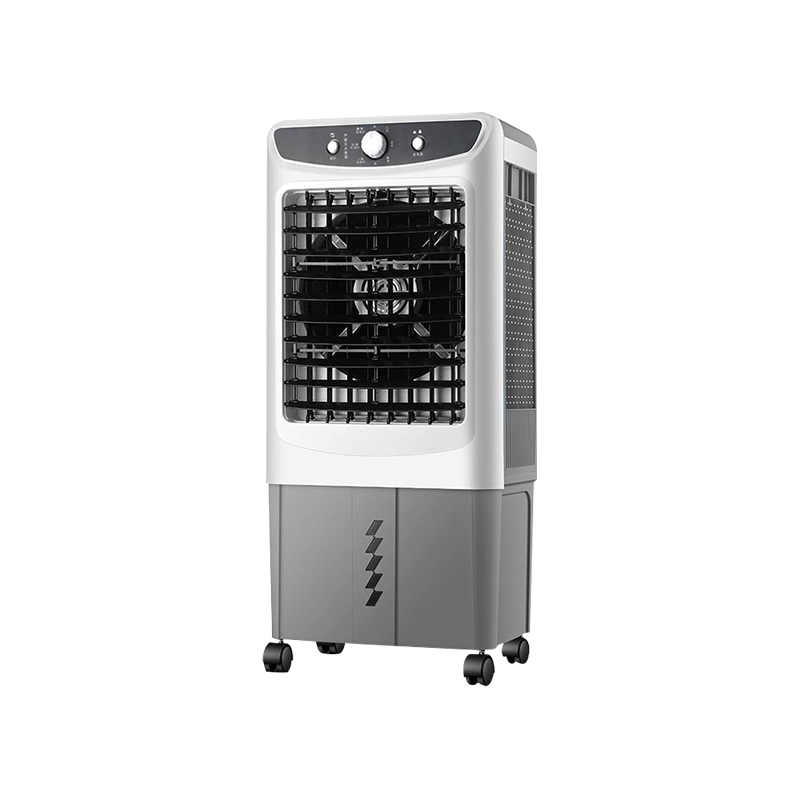
Guía completa 2024
La guía definitiva sobre enfriadores de aire: cómo funciona, tipos, ventajas y desventajas
Todo lo que necesita saber sobre los enfriadores de aire evaporativos, desde principios y tipos de funcionamiento hasta consejos de compra y preguntas frecuentes.
¿Qué es un enfriador de aire y cómo funciona?
un enfriador de aire (también llamado enfriador evaporativo o enfriador de pantano) enfría el aire mediante la evaporación del agua. El aire caliente pasa a través de almohadillas empapadas en agua dentro de la unidad; A medida que el agua se evapora, absorbe energía térmica, lo que reduce la temperatura del aire hasta 15 °C (27 °F) antes de que el aire enfriado entre en la habitación. Este proceso no consume refrigerante y utiliza mucha menos electricidad que un aire acondicionado convencional.
Paso a paso: cómo funciona un enfriador de aire a base de agua
- Un ventilador aspira aire ambiente cálido y seco hacia la unidad.
- El aire pasa a través de almohadillas de enfriamiento de celulosa o de panal saturadas de agua.
- Las moléculas de agua absorben calor del aire y se evaporan.
- El aire enfriado y ligeramente humedecido se expulsa al espacio.
- Una bomba vuelve a humedecer continuamente las almohadillas desde el tanque de agua incorporado.
El efecto de enfriamiento es mayor cuando el la humedad relativa es inferior al 60% . En climas áridos, son comunes las caídas de temperatura de 10 a 15°C. En las zonas costeras húmedas, el efecto se reduce a 2-4°C.
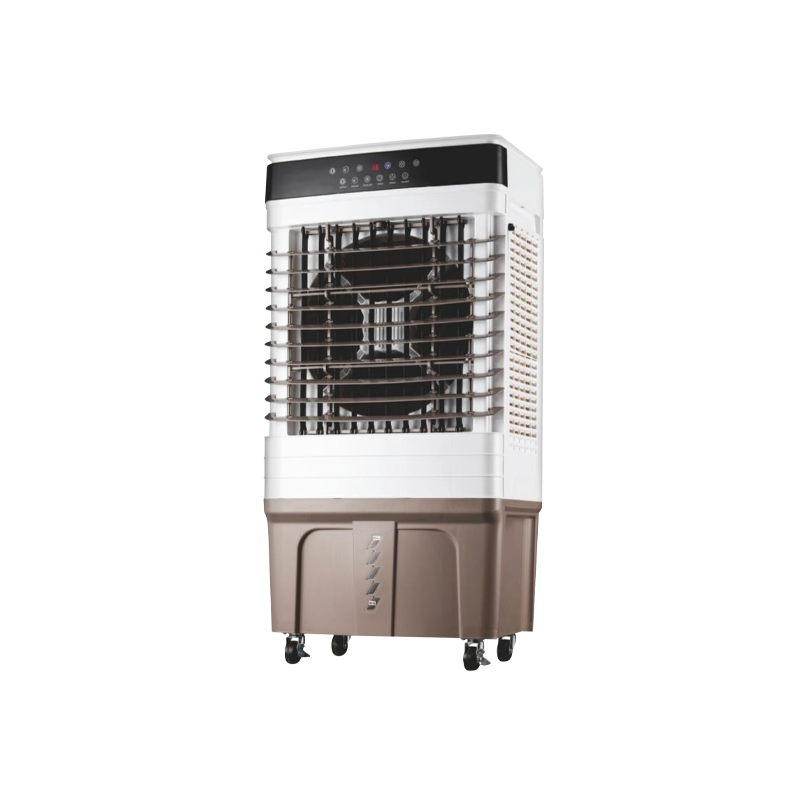
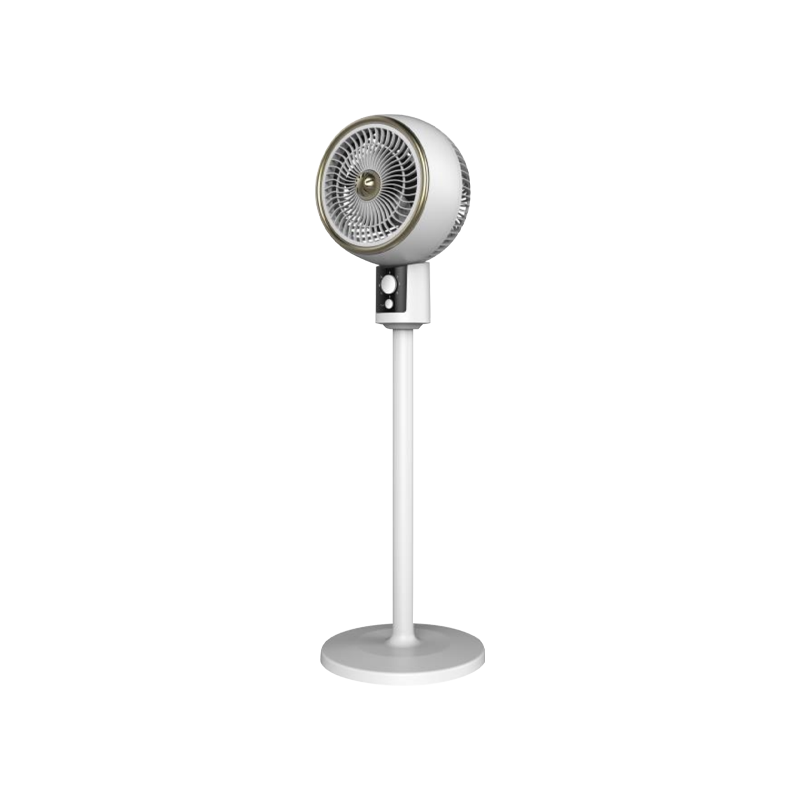
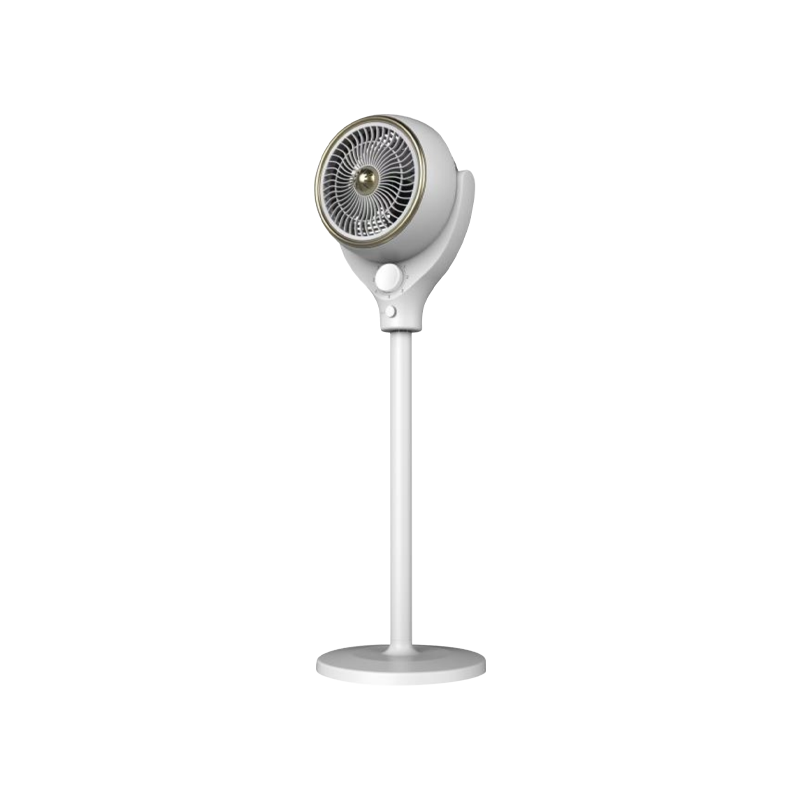
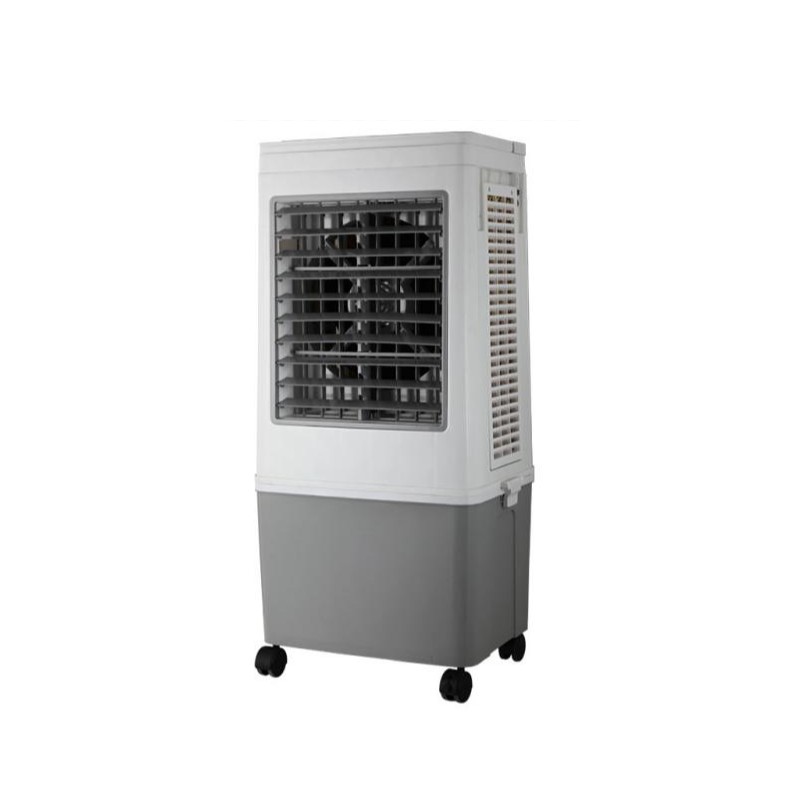
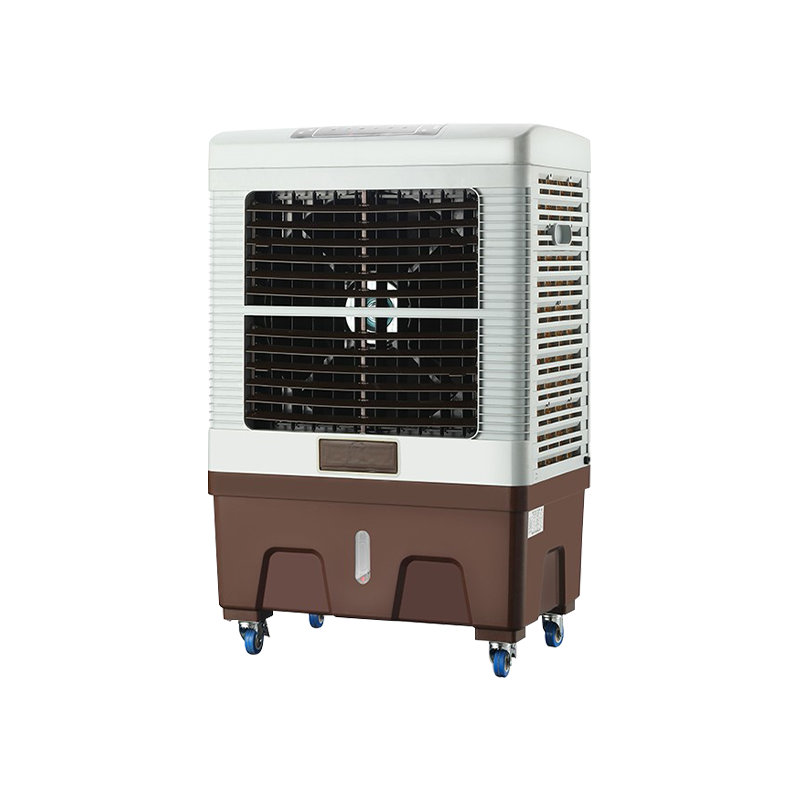
Enfriador evaporativo de suelo
Tipos de enfriadores de aire
No todos los enfriadores de aire funcionan de manera idéntica. Comprender los tipos principales le ayudará a elegir la unidad adecuada para su espacio.
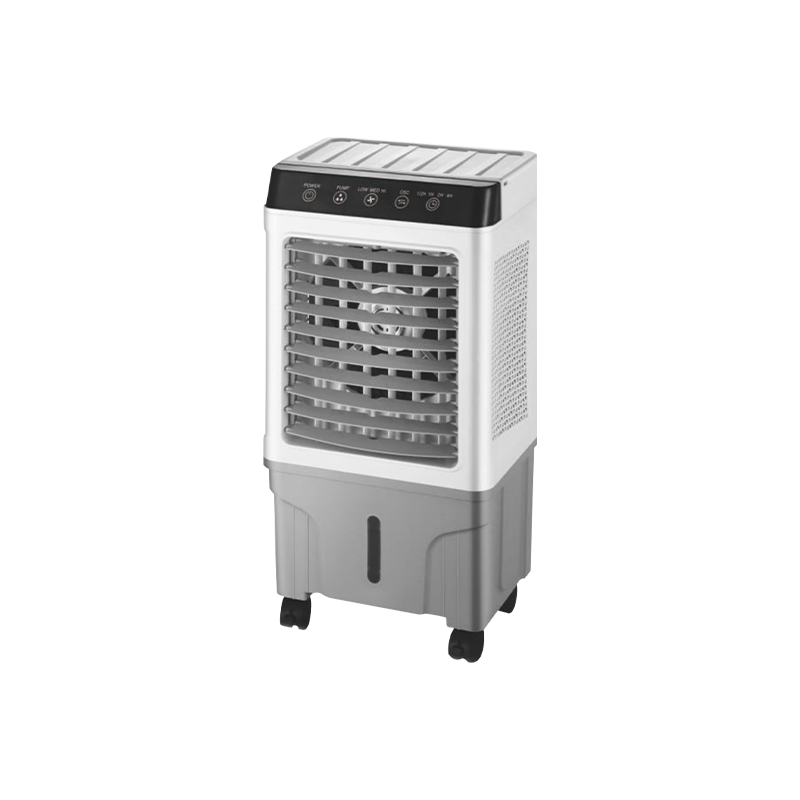
Personal/Escritorio
1–3 litros · hasta 5 m² · 10–30W
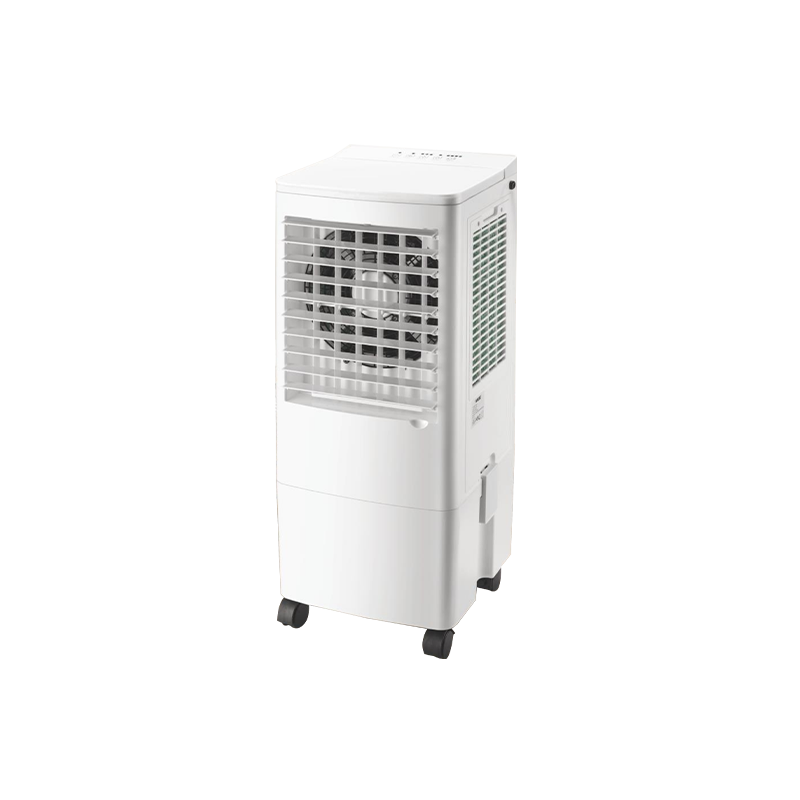
Torre / Piso
5–15 litros · 20–40 m² · 60–150 vatios
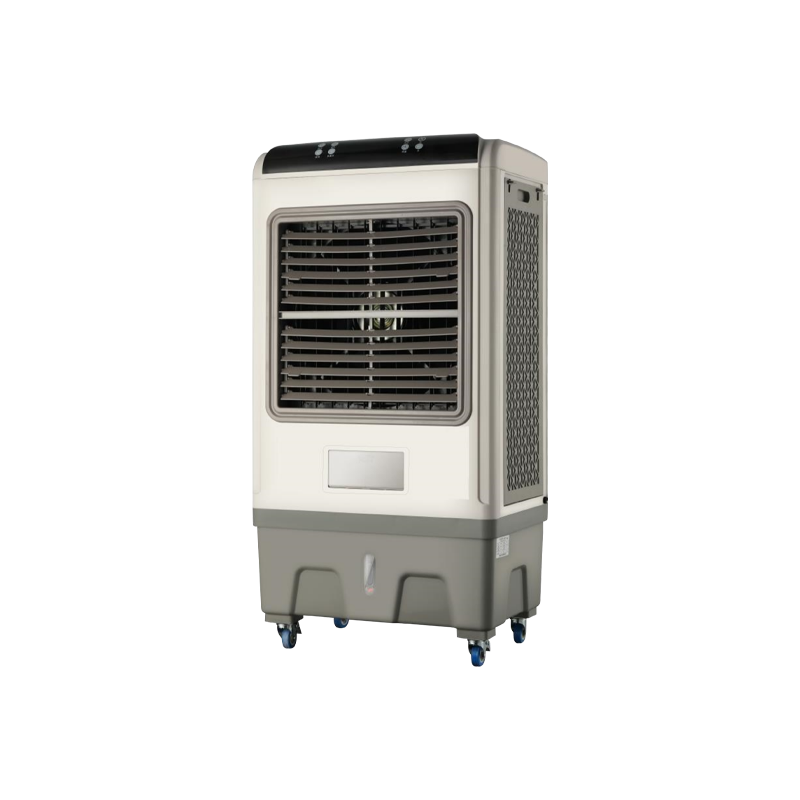
Ventana / Habitación
15–30 litros · 40–80 m² · 150–300 vatios
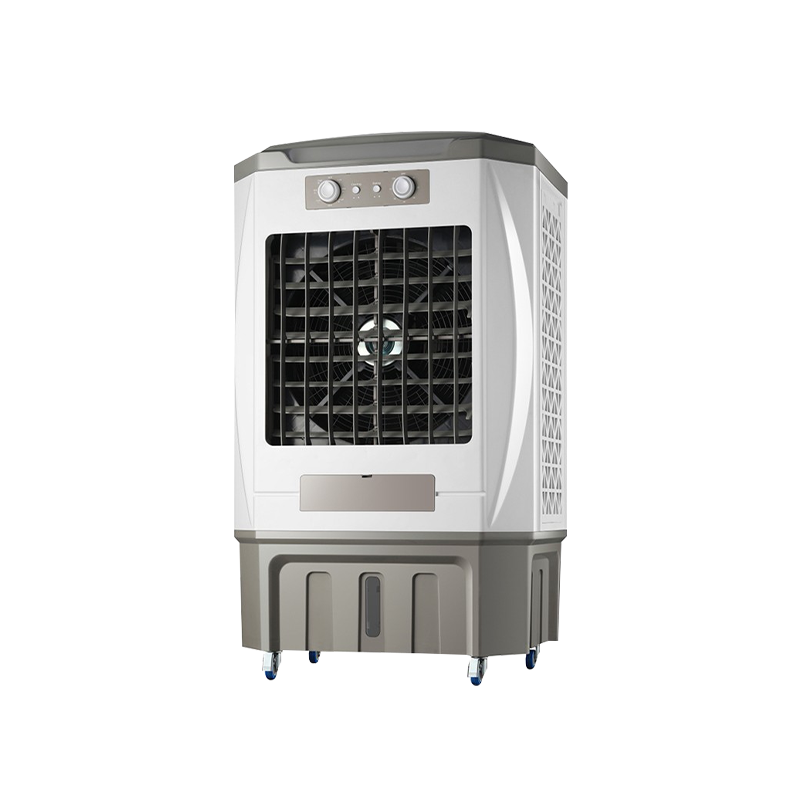
industriales / Conducto
50–200 litros · 100–500 m² · 0,5–3 kW
| Tipo | Mejor para | Tamaño del tanque | Área de cobertura | Potencia típica |
|---|---|---|---|---|
| Personal/Escritorio | Persona sola, escritorio | 1–3 L | Hasta 5 m² | 10–30 W |
| Torre / Piso | salones, dormitorios | 5–15 L | 20–40 m² | 60–150 W |
| Ventana / Habitación | Ventilación de toda la habitación | 15–30 L | 40–80 m² | 150–300 W |
| industriales / Conducto | Almacenes, talleres | 50–200 litros | 100–500 m² | 500W-3kW |
Enfriador de aire a base de agua: pros y contras
La mayor ventaja de un enfriador de aire a base de agua es su coste de funcionamiento: utiliza entre un 75 y un 80 % menos de electricidad que un aire acondicionado con refrigerante comparable. Un refrigerador de torre de 150 W que funciona 8 horas al día cuesta aproximadamente entre 0,15 y 0,20 dólares por día, frente a 1,00 y 1,50 dólares por una unidad de aire acondicionado de ventana de 1.000 a 1.500 W.
Ventajas
- Bajo consumo de energía: 10–300 W; sin compresor.
- Sin refrigerantes: PCA cero; ecológico.
- Agrega humedad: Útil en climas secos por debajo del 30–40 % de humedad relativa.
- Costo inicial más bajo: Entre $80 y $300 frente a entre $400 y $1000 para aire acondicionado.
- Portátil: No se necesita instalación permanente.
- Sensación de aire fresco: Atrae continuamente aire exterior.
Desventajas
- Dependiente de la humedad: Ineficaz por encima del 70% de HR.
- Aumenta la humedad interior: Puede sentirse húmedo en habitaciones húmedas.
- Requiere ventilación: Las ventanas deben permanecer ligeramente abiertas.
- Recarga frecuente: Un depósito de 15 litros dura sólo entre 4 y 8 horas.
- Mantenimiento: Las almohadillas deben limpiarse cada 2 a 4 semanas.
- Refrigeración limitada: No se pueden alcanzar puntos de ajuste precisos de 18 a 22 °C.
Enfriador de aire versus aire acondicionado: ¿cuál debería elegir?
| factores | Enfriador de aire | aire acondicionado |
|---|---|---|
| Costo de funcionamiento (8 horas/día) | ~$0,15–$0,20 | ~$1.00–$1.50 |
| Precio de compra | $80–$300 | $400–$1,500 |
| Funciona en alta humedad | No (>70% HR: pobre) | si |
| Potencia máxima de enfriamiento | Caída de 5 a 15 °C | Punto de ajuste preciso |
| Instalación | Ninguno (portátil) | Requerido |
| Impacto ambiental | muy bajo | Moderado-alto |
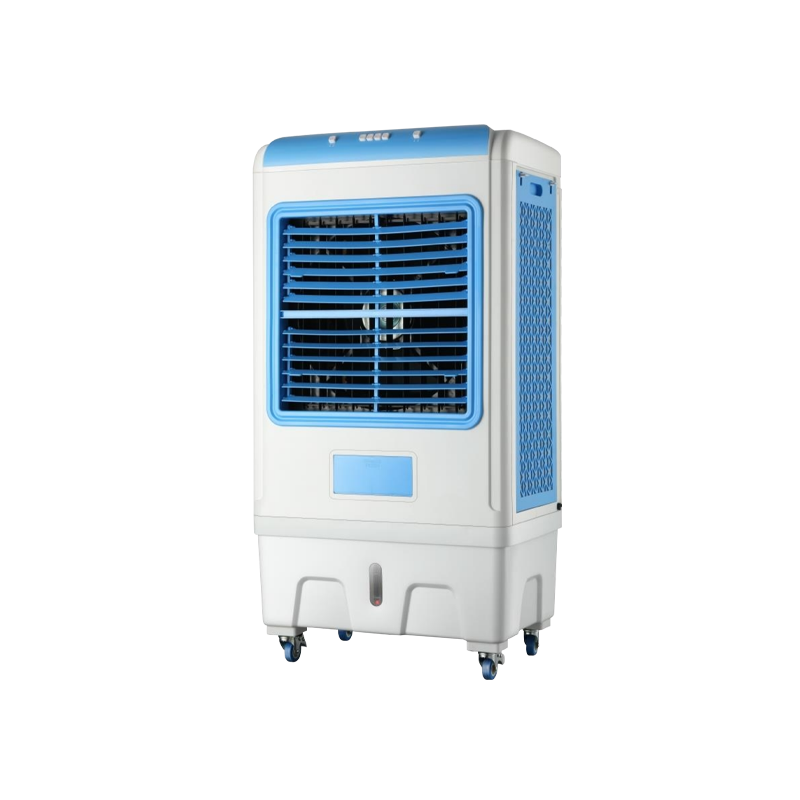
Veredicto: Elija un enfriador de aire si vive en un clima seco (por debajo del 50% de humedad promedio) y desea una solución ecológica y de bajo costo. Elija un aire acondicionado si vive en un clima húmedo, necesita un control preciso de la temperatura o necesita un enfriamiento confiable por encima de los 38 °C de temperatura exterior.
Los mejores enfriadores de aire: qué buscar
Al leer reseñas de enfriadores de aire o tomar una decisión de compra, evalúe estas especificaciones clave:
- Flujo de aire (CFM o m³/h): Haga coincidir el tamaño de la habitación; Intente realizar entre 20 y 30 cambios de aire por hora.
- Material de la almohadilla de enfriamiento: El panal de celulosa (de 45 a 150 mm de espesor) supera a los paneles de álamo básicos.
- Capacidad del tanque: Los tanques de 15 a 20 litros significan menos recargas; Busque modelos de entrada continua.
- Configuraciones de velocidad del ventilador: Al menos 3 velocidades; Los ventiladores con motor de CC son más silenciosos y eficientes.
- Lamas abatibles: Las rejillas multidireccionales distribuyen el aire frío de manera más uniforme.
- Temporizador y control remoto: Conveniente para uso en dormitorio; evita la sobrehumidificación durante la noche.
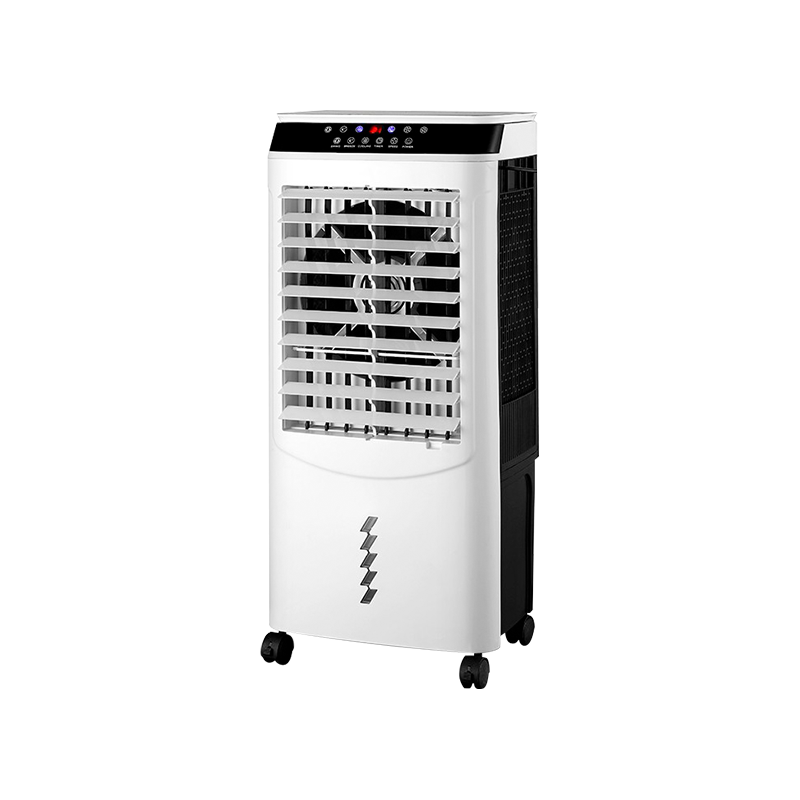
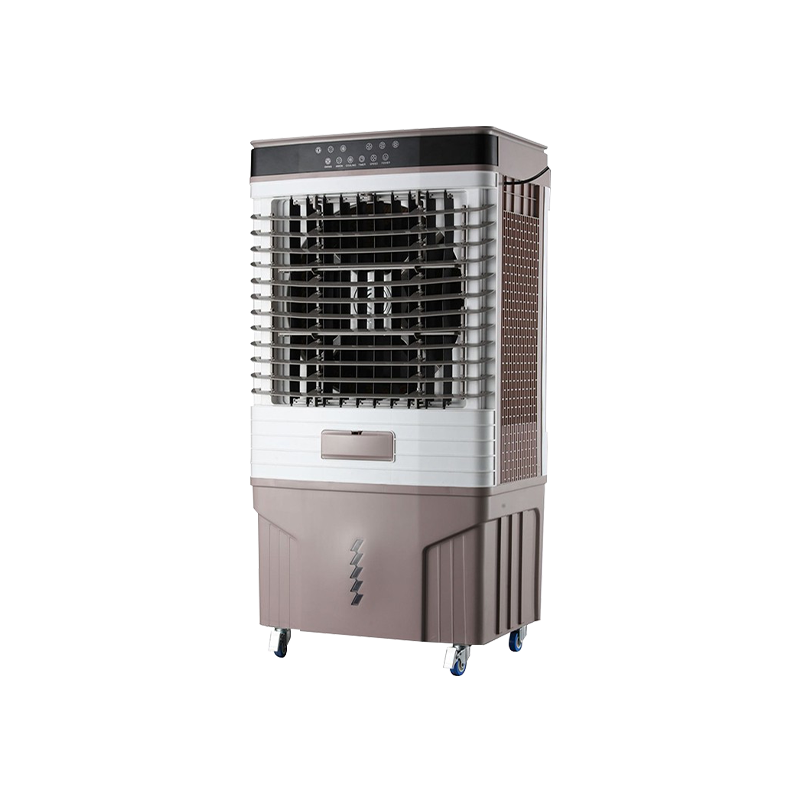
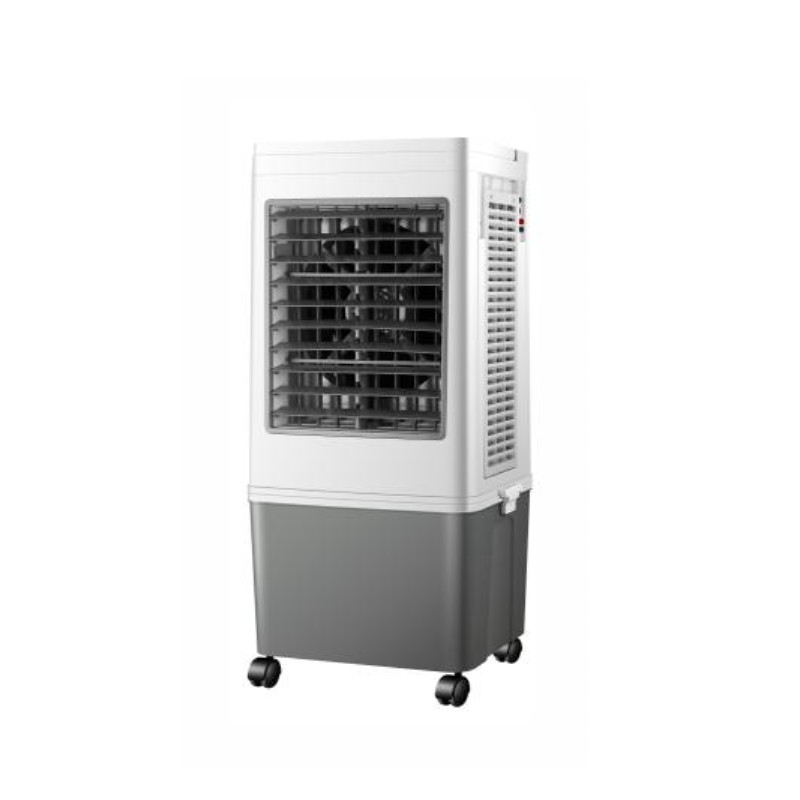
Enfriador de tres modos de 36 L LBW-6500RC
Modelos mejor valorados por categoría
Escritorio personal
Honeywell CS10XE
Compacto, silencioso
Torre mediana
Dieta sinfónica 12T
Depósito de 12 L, aire i-Pure
Habitación grande
Bajaj Platini PX97
36 L, refrigeración de 4 vías
Industrial
Portacool Ciclón 2000
2000 CFM, transmisión directa
Enfriador de aire como ambientador: ¿limpia el aire?
Un enfriador evaporativo estándar tiene propiedades suaves de filtrado de aire: las almohadillas húmedas atrapan algo de polvo y polen, y la entrada constante de aire fresco diluye los contaminantes interiores. Sin embargo, un enfriador evaporativo no sustituye a un purificador de aire dedicado . Algunos modelos premium incluyen filtros HEPA o de carbón activado que reducen las PM2,5 y los olores de forma más eficaz.
Para realzar la frescura, puedes agregar unas gotas de aceite esencial (eucalipto, menta) al tanque de agua. Esto dispersa un ligero aroma a través de la corriente de aire, combinando eficazmente refrigeración por aire y aromatización suave en una sola unidad.
Preguntas frecuentes sobre enfriadores de aire
¿Puedo usar un enfriador de aire en una habitación cerrada?
No — Los enfriadores evaporativos necesitan un flujo de aire fresco para funcionar. Deje una ventana o puerta ligeramente entreabierta (espacio de 5 a 10 cm) para que pueda escapar el aire de escape cálido y húmedo. Sellar la habitación hace que la humedad aumente en cuestión de minutos.
¿Con qué frecuencia debo cambiar el agua?
Drene y rellene el tanque cada 1 a 3 días cuando esté en uso regular. El agua estancada puede desarrollar bacterias y producir olores desagradables. Vacíe siempre el tanque cuando guarde la unidad.
¿Cuánto duran las almohadillas refrigerantes?
Las almohadillas de celulosa en forma de panal suelen durar 1 a 3 temporadas (aproximadamente 300 a 600 horas de uso). Enjuague mensualmente; reemplácelos cuando se vuelvan rígidos, descoloridos o desarrollen un olor persistente.
¿Un enfriador de aire es bueno para dormir?
Sí, en climas secos. Los refrigeradores de torre modernos funcionan a 40–55dB en su configuración más baja, más silenciosa que la mayoría de los ventiladores. Utilice el temporizador de apagado para apagar la unidad después de 2 a 3 horas para evitar humedecer demasiado el dormitorio.
¿Un enfriador de aire consume mucha agua?
Un enfriador de torre de tamaño mediano evapora aproximadamente 0,5 a 2 litros por hora . Funcionando 8 horas al día, es decir, entre 4 y 16 litros. Las unidades industriales pueden consumir entre 20 y 60 litros por hora.
¿Puede un enfriador de aire reducir la temperatura en 10 grados?
Sí, en las condiciones adecuadas. Se puede lograr una caída de 10°C cuando la temperatura exterior es de 35 a 40°C y la humedad relativa es inferior al 30%. Por encima del 70 % de humedad relativa, la caída suele ser inferior a 3 °C.
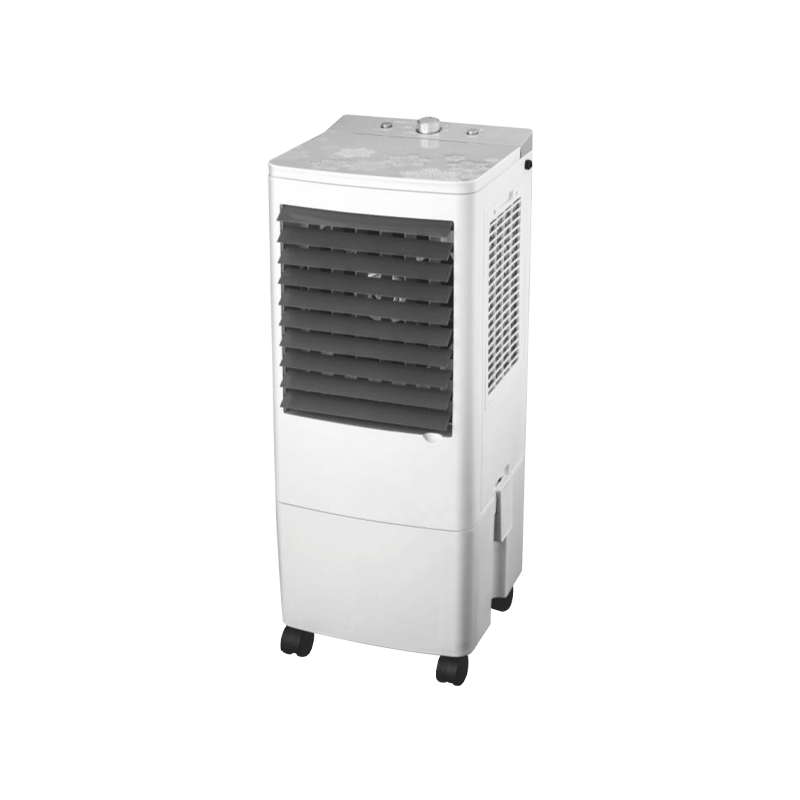
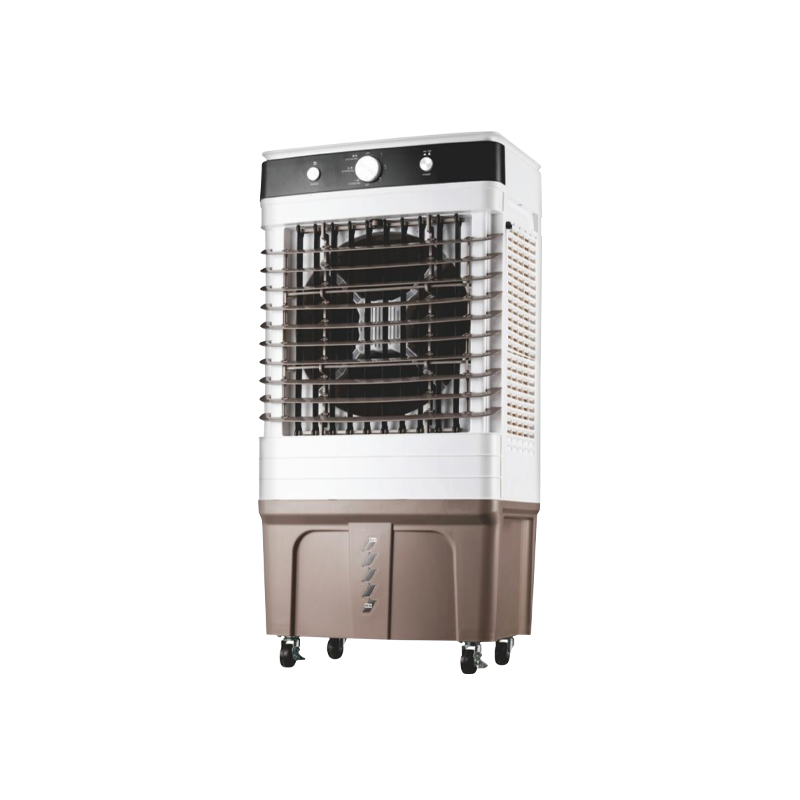
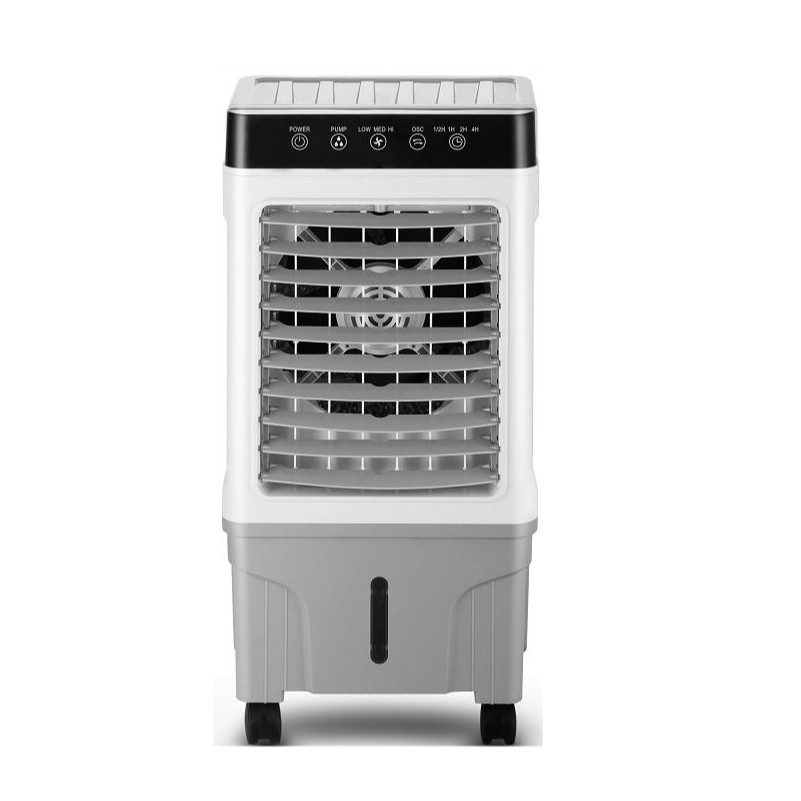
Enfriador portátil de 3 velocidades LBW-5000-1
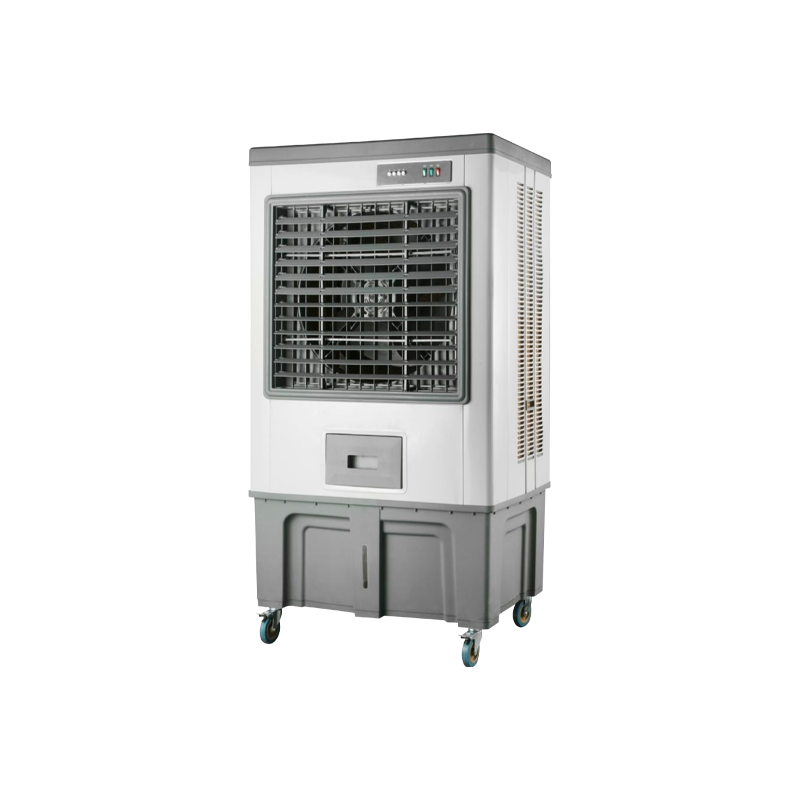
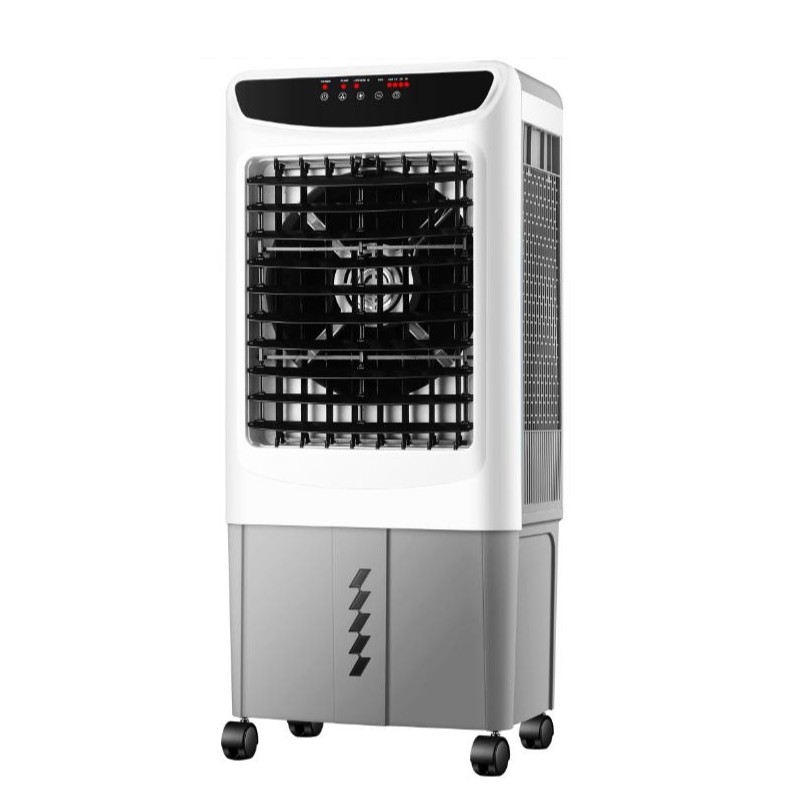
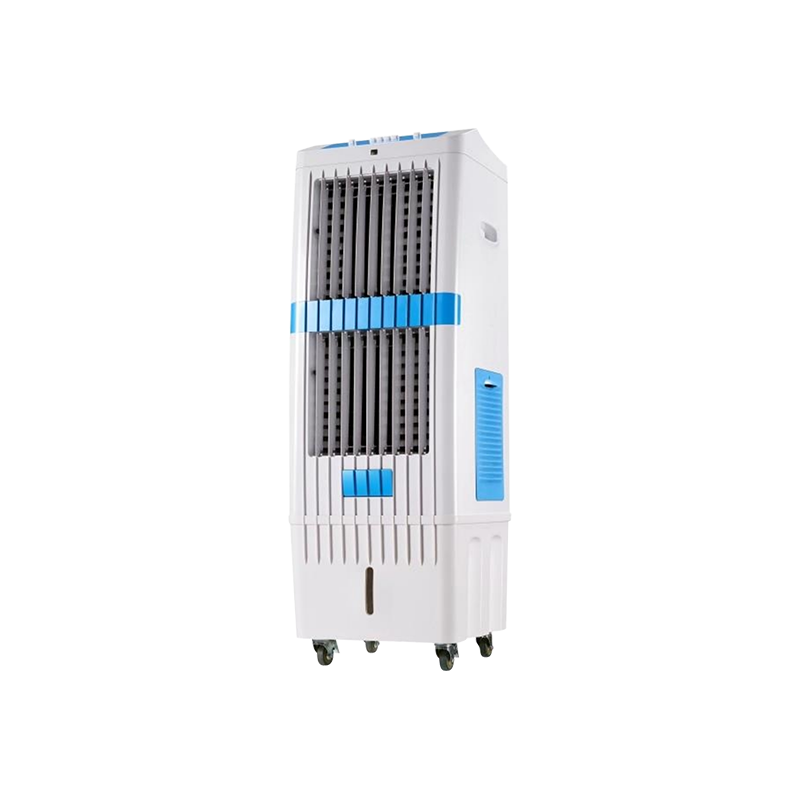
Nevera portátil 80W 20L LBW-5000RC
Imágenes del producto cortesía de Cixi Bisheng Electrodomésticos Co., Ltd. — fabricante de enfriadores de aire evaporativos con 10 años de experiencia.